


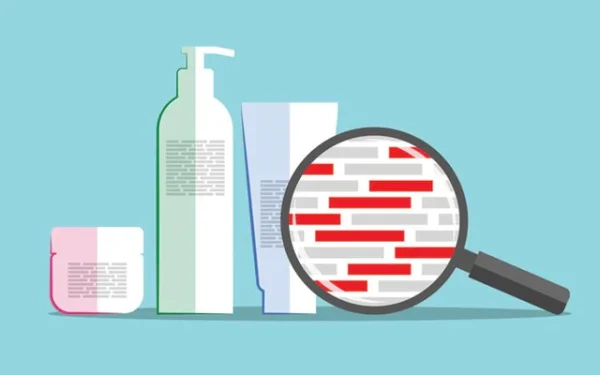
Are you aware of what’s going on within the cosmetics you use on your face? Is it safe to use chemical compounds on your skin and body? We intended to summarize the top 16 dangerous compounds in cosmetics and skincare after investigating them. Here you have it.
Highlights:
- Chemicals in Cosmetics May Be Hazardous
- How can i tell if a product has hazardous chemicals?
- What Exactly Is Non-Toxic Skincare And Makeup?
Chemicals in Cosmetics May Be Hazardous
1.Sulfates
When sulphuric acid (H2SO4) combines with another chemical, sulfates are generated. They are also made from petroleum and plant materials such as coconut and palm oil. They function as surfactants and are utilized in lathering.
Sulfates can cause eye and skin irritation. They have the potential to prematurely remove colour from your hair. There is also an ongoing dispute concerning their use owing to potential environmental risks. Deriving them from natural sources, such as palm oil, is destroying rainforests. They can be poisonous to aquatic organisms if they are washed away.
Did You Know?
Sulphates are included in the majority of mascaras on the market.
2. Parabens
Preservatives such as parabens are used to keep your skincare and cosmetics fresh and germ-free. They may be found in a wide range of items, including soaps, lotions, and cosmetics. According to research, they enhance the synthesis of the hormone estrogen (female sex hormone) and interfere with reproductive and cognitive function.
According to some research, parabens infiltrate your skin and mimic estrogen, causing excessive cell proliferation in the breast. Breast cancer develops as a result of this.
3. Phthalates
Phthalates are salts or plasticizing compounds that are used to improve a product’s spreadability. They can be found in nail paints, fragrances, and lotions, to mention a few applications. These are reproductive and developmental poisons that are also utilized as shampoo softeners.
4. Synthetic colors
Petroleum or coal tar are used to make synthetic colors. Hydrocarbons, carbon, and water combine to form coal tar. It is a thick, black, viscous liquid with a distinct odor. Have you been looking for lipsticks with a lot of pigment? It’s time to consider what goes into these colours. The heavier the pigment, the greater the possibility of higher coal tar concentrations.
Several commercially available eyeshadows include coal tar as well. Skin irritation, cancer, acne outbreaks, and ADHD can all be caused by synthetic colors (attention deficit hyperactivity disorder).
5. Fragrance
Fragrances can be found in cosmetics such as perfumes, moisturizers, shampoos, cleansers, and conditioners. They are produced using chemicals that have been linked to respiratory ailments, skin allergies, dermatitis, and reproductive system negative effects.
6. Triclosan
Triclosan is a chemical that is commonly found in toothpaste tubes, antibacterial soaps, and deodorants. It is anti-bacterial in nature and efficient against microorganisms, but it is also an endocrine disruptor and skin irritant. According to certain research, triclosan can cause intestinal inflammation and tumor development in mammals.
Triclosan degrades slowly and is hence regarded as a possible environmental hazard. Triclosan, like sulfates, is toxic to aquatic life.
7. Toluene
Toluene is a petrochemical solvent that is commonly used in hair colors and nail paint. These can be harmful to your immune system and increase your risk of birth abnormalities and blood cancer. If you are pregnant, avoid using hair colors and nail paint since they can harm the growing fetus.
Toluene can have an effect on the human central nervous system, causing weariness, headache, nausea, and sleepiness.
8. Talc
Do you remember how soft talcum powder is? This is due to the fact that talc is the softest naturally occurring mineral. Talc is an absorbent that is commonly found in baby powders, eye shadows, blush, deodorants, and some soaps.
Talc, on the other hand, has been linked to ovarian cancer. It originally became a source of worry when a lady who had used Johnson & Johnson talc for 35 years died of ovarian cancer. Talc can induce lung cancers when breathed.
9. Lead
Lipsticks, eyeliners, foundation, and whitening toothpastes all contain lead. Lead is not directly added to lipsticks, although it is a prominent contaminant in lipstick colorants. Do you wear lipstick to work every day? We feel the same way! And we needed this wake-up call!
Lead is a heavy metal that may be found naturally in the earth’s crust. We already have enough lead in our air, food, and water. The United States Food and Drug Administration (FDA) controls cosmetics and has approved lead levels ranging from 0 to 20 parts per million (ppm).
10. Chemicals In Sunscreens
Sunscreens contain chemicals such as PABA, benzophenone, oxybenzone, ethoxycinnmate, and homosalate. They are thought to absorb light, but instead of protecting the body, they do greater harm. Some compounds in sunscreen are endocrine disruptors.
11. Polyethylene Glycol (PEG)
PEG is a thickening ingredient found in skincare products such as lotions, sunscreen, and shampoos. It has the potential to cause cancer and respiratory problems. It can also remove the natural oils (sebum) from your skin, causing the sebaceous glands (oil-producing glands) to produce more sebum, making your skin oily.
12. Formaldehyde
In skincare, formaldehyde is frequently used as a preservative. It is a colorless gas that is used to suppress bacterial development. Nail polishes, hair straightening treatments, hair gels, nail hardeners, shampoos, deodorants, lotions, and cosmetics all contain formaldehyde. It has been linked to neurotoxicity, hair loss, scalp burns, asthma, and developmental toxins. Formaldehyde, when breathed, can induce dizziness and asphyxia.
13. Diethanolamine
The foamy cleansers, body washes, and shampoos are our favorites. Do we not? Yet, are you aware of the chemical that aids in foaming? It’s called diethanolamine. It’s a foamy agent found in body washes, shampoos, cleansers, and bubble bath. It is a carcinogen and a respiratory toxin.
14. Alcohol
Alcohol is a frequent solvent in cosmetics. It aids in product absorption and is hence an excellent choice for some creams and lotions. Yet, alcohol is a dangerous skincare component. Alcohol (drying alcohol) in skincare can cause dry, flaky skin. It interferes with the skin’s regeneration process. Yet, not all alcoholic beverages are harmful to your skin. Fatty alcohols, which are generated from natural fats and oils, are excellent moisturizers.
15. Hydroquinone
In skincare, hydroquinone is used to lighten the skin. It’s used to treat acne scars, freckles, melasma, age spots, and post-inflammatory hyperpigmentation. Hydroquinone works by inhibiting melanin pigment-producing cells (melanocytes).
Hydroquinone, on the other hand, is a proven carcinogen. Extended usage can cause skin lightening since it significantly lowers melanocytes.
16. Petrolatum
Petrolatum softens the skin and is suitable for dry skin. Petrolatum is used in lip balms and moisturizers. While it forms a barrier to keep water from leaving, it also stops moisture from the air from being absorbed. Your skin gradually dries out, which is why you’re inclined to reapply lip balm. Moreover, if not thoroughly refined, hazardous compounds such as polycyclic aromatic hydrocarbons (PAHs) might be retained.
How Do I Know If A Product Contains Harmful Chemicals?
- When purchasing skincare products, read the labels.
- SLS (sodium lauryl sulfate) and SLES (sodium laureth sulfate) are the most prevalent sulfates found on shampoo and other personal care labels.
- Parabens are chemicals in the methyl, butyl, and propyl families.
- Toluene is also known by the names benzene, phenylmethane, toluol, and ethylbenzene.
- PEGs can be identified by numbers such as 100, 120, 14M, 30, 32, 40, 75, and so on.
- Formaldehyde is indicated by the terms formalin, formaldehyde, glyoxal, and bronopol on the labels of skincare products.
- In skincare products, diethanolamine is abbreviated as DEA.
- Drying alcohols include ethanol, methanol, denatured alcohol, and ethyl alcohol.
- Petrolatum components include mineral oil, benzene, paraffin wax, and compounds ending in -eth.
- FD&C or D&C are synthetic colors. F stands for food, and D&C stands for medications and cosmetics.
- Search for cosmetics businesses that are open and honest about their components.
- Think about natural brands that are not only safe but also include effective chemicals.
- Don’t be too hasty to judge a natural brand because certain natural, plant-derived substances might be irritating to you.
What Are Non-Toxic Skin Care And Makeup?
Everything that isn’t a red flag item is included in non-toxic skincare products. These substances are neither estrogenic, carcinogenic, or allergenic. They are non-toxic and have not been identified as harmful by environmental bodies. The majority of natural substances derived from plants fall under the category of non-toxic skincare and cosmetic ingredients.
The cosmetics and skincare industries will not make it a priority to inform consumers about the ingredients in their products. But, we should. For healthy skin and body, conduct your own research and switch to safer substances. Do you have any queries concerning your current cosmetics or skincare? Please leave a remark below.